
Call Us

+1-(615) 799-4065

Our Location

Indore

Email

info@mediconeckt.com

Our Location

Indore

Services

OT/CSSD Planning & Supplies

MDP.MediConeckt OT/CSSD Planning & Supplies Solutions

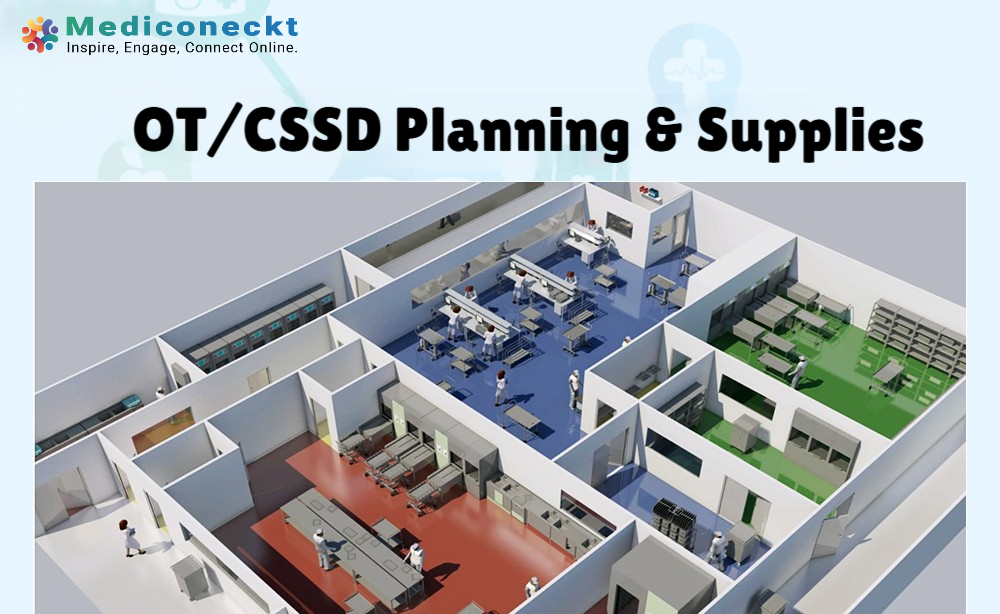
MDP.MediConect specializes in the strategic planning and supply of Operation Theatres (OT) and Central Sterile Services Departments (CSSD), ensuring compliance with international healthcare standards and infection control protocols. Their solutions cover layout design for optimal workflow, zoning for sterile and non-sterile areas, and integration of modular OT systems for enhanced efficiency and safety. MDP provides end-to-end support including ventilation systems, lighting, surgical tables, autoclaves, washers, and sterilization equipment. By combining ergonomic design with state-of-the-art technology, MDP.MediConect helps healthcare facilities build highly functional OT and CSSD units that ensure surgical precision, patient safety, and staff efficiency.


INTRODUCTION

The Central Sterile Supply Department (CSSD) plays a critical role in hospital operations. It is responsible for the centralized management of receiving, cleaning, assembling, sterilizing, storing, and distributing medical equipment and materials in a sterile condition.

This centralized hub ensures sterilization is carried out in a bacteriologically safe environment, under controlled conditions, with appropriate supervision — contributing significantly to lowering hospital-acquired infections.

With the evolving nature of healthcare infrastructure, the Hospaccx team remains engaged with the latest trends and developments in CSSD design. This overview highlights key considerations in planning and designing a CSSD. For in-depth consultation, please visit   mdp.mediconeckt.com

OT/CSSD Planning & Supplies

CSSD DESIGN OVERVIEW

Used and contaminated medical tools should be delivered in sealed units to a designated reception zone, which should be directly connected to the washing area and clearly isolated from clean areas. Unauthorized access to this zone should be restricted.


Cleaning aims to ensure all instruments are thoroughly washed, dried, and disinfected. Ideally, this step should be automated and consistently validated to maintain hygiene standards.

Post-cleaning, items are moved to the IAP room. This space must maintain higher air pressure than adjacent zones and be classified as a cleanroom environment. Staff should have a dedicated changing area for donning protective gear before entry. Direct access to a housekeeping area is also essential.

Handwashing and other water-related activities should be carried out outside this room to reduce contamination risk. Doors connecting IAP with washing and sterilization zones should be interlocked for added safety.

Steam is the most common sterilization method. However, alternative sterilization methods should be available for heat-sensitive instruments. These processes may require additional areas for preconditioning, degassing, or quarantine, in line with safety regulations.

Textiles processed through CSSD may be single-use or reusable. Regardless of type, they should be inspected, cleaned, and packed in a controlled setting to maintain sterility and meet quality standards.


Designated zones should exist for the receipt of soiled items and the dispatch of sterilized materials using trolleys and containers.

Facilities for staff to change from outdoor to work clothing should be provided, with personal lockers and separate toilets and shower areas accessible from but outside the main workspaces.


Staff at all levels should undergo regular training. A dedicated training space, separate from operational zones, should be allocated for educational sessions and material storage.


MIS helps track instruments throughout the sterilization cycle. All workspaces should be equipped with sufficient data points for seamless integration. Wireless systems are increasingly preferred, reducing the need for manual cabling.


Dedicated rooms for cleaning tools specific to each CSSD area are crucial to prevent cross-contamination between clean and dirty zones.


Waste disposal should comply with hospital policies and legal standards. Containers should ideally be foot-operated and covered to maintain hygiene.


The CSSD must have separate storage for unprocessed (raw) materials and sterilized products. Chemicals stored must comply with health and safety regulations. Proper inventory management ensures smooth daily operations.


KEY DESIGN CONSIDERATIONS

Lighting
Natural lighting in cleaning and IAP rooms supports visual inspections and boosts morale. Artificial lighting should mimic natural light and ensure consistency across all working areas.

Ventilation
Air conditioning is crucial in washing and IAP rooms due to the heat and moisture produced by sterilizing equipment. Proper ventilation preserves equipment integrity and ensures staff comfort.

Noise Management
Sound-absorbing materials should be used where possible, particularly in cleaning zones. Quiet areas like offices and training rooms should be located away from high-noise sections.

Wall Construction
Solid, smooth-surfaced walls that resist damage and contamination are preferred. Use protective rails and guards in high-traffic areas to minimize wear and tear.

Flooring (HTM 61)
Uniform, durable, non-slip floors with coved skirting should be used across the department. Floors should be easy to clean and capable of withstanding heavy equipment movement.

Ceilings (HTM 60)
Ceilings must be designed to allow safe access to above-ceiling services without risking contamination.

Doors
Doors should accommodate the movement of equipment and trolleys and include features such as vision panels, pressure-sensitive open mechanisms, and emergency exits with visible alarms.

Windows (HTM 55)
Fixed, sealed windows are recommended in sterile areas, while operable windows may be used in staff rooms or offices, provided they allow for safe cleaning access.

Shopping Cart

Customer Service

FAQ

Return Policy

Need Help

Monday – Friday: 9:00-20:00
Saturday: 11:00 – 15:00

We are a team of healthcare professionals committed to delivering excellence through years of expertise in providing high-quality healthcare solutions.